Women Sowing Justice: Agroecological Experiences in Rio de Janeiro and Santa Fe
Lotta Ortheil, LMU
2026
“Our weapons are the seeds, the herbs, the encounters, the changes.” — Ana Santos
This text explores how urban agroecology groups led by women from historically marginalized communities envision and create more ecologically and socially just forms of urbanism. It is based on the narratives of two women: Ana Santos in Rio de Janeiro and Verónica Jaramillo in Santa Fe.
Sacrifice Zones as a Form of Urban Racism
According to data from the Food and Agriculture Organization (FAO), women produce between 60% and 80% of the food in developing countries and around half of the world’s food. Because of their central role in food production, they and their families are also more directly exposed to the adverse health impacts of environmental degradation, such as pesticide use.
Verónica Jaramillo lives and works in a territory characterized as a sacrifice zone of agroindustry. The province of Santa Fe has historically been a centre of industrial agriculture and is currently a hub of transgenic soybean production which is mainly oriented toward the manufacture of animal feed in China. Verónica is responsible for one of the agroecological modules of the women’s collective La Verdecita, which has defended food sovereignty and the dignified lives of small-scale farmers in the horticultural belt of Santa Fe city since 2002. In our interview, she described how glyphosate spraying impacted her:
“When my partner had to spray pesticides, it affected me a lot. Even if he was working far away, at the other end of the field, the wind and the air would still carry the smell, and you would end up breathing it in anyway“
Ana Santos co-founded the Centro de Integração na Serra da Misericórdia (CEM) as an initiative for socio-environmental, cultural, and community integration in the Complexo da Penha (favela complex) in 2011. The Serra da Misericórdia is the largest remaining green area of the Atlantic Forest in the Northern Zone of Rio de Janeiro and is designated as an environmental protection area. Nevertheless, it has been turned into a sacrifice zone, as materials such as cement have been extracted in private quarries since the 1940s. Reflecting on the situation, Ana said in our interview:
“The largest and most polluting industrial plants are located in the sacrifice zones. And we have to sacrifice ourselves […] So that the city can develop, right?”.
She further described how she felt this violation:
“It makes me sick when I come home and see that everything is full of garbage and it’s getting worse. The stone dust makes me sick. This violence, symbolic and non-symbolic, makes me very ill. It is a constant torment”.
Both women emphasize how they perceive the harmful environmental impacts of industrial activities in their own bodies. Anthropologist Marcelo Sarlingo refers in this context to the “social production of poisoned bodies”: bodies that suffer the effects of living with the waste of production processes and the social meanings and practices that result from them. Psychologist Maria da Graça Costa describes sacrifice zones as a new form of racialized urban management, in which the needs and perspectives of residents are systematically ignored.
Creating Alternative Urbanisms through Agroecology
Being involved in agroecology has enabled both women to articulate alternative visions of urban development centred on sovereign food production and biodiversity preservation. In combination with ecofeminism, this perspective emphasizes the maintenance of life and people’s well-being, while remaining particularly attentive to gender and other intersecting inequalities, such as class and race.
Ana Santos highlights the connection between agroecology and women’s memories associated with their quintais (home gardens), such as orienting agricultural practices according to lunar phases and nourishing the soil with leguminous plants. She argues that decolonial agroecology is not only about cultivating plants in an ecological way, but also about revaluing and making visible the knowledge and labor of historically marginalized communities. For Ana, it is crucial to adapt agroecological practices to the specific territory, since “every area has its vulnerabilities, and every favela is different”. In the violent environment of the Penha favela complex, marked by strong machismo, she experiences organizing, planting and cooking together with other women as healing. These practices reflect a form of communal feminism that values and strengthens everyday solidarity networks.
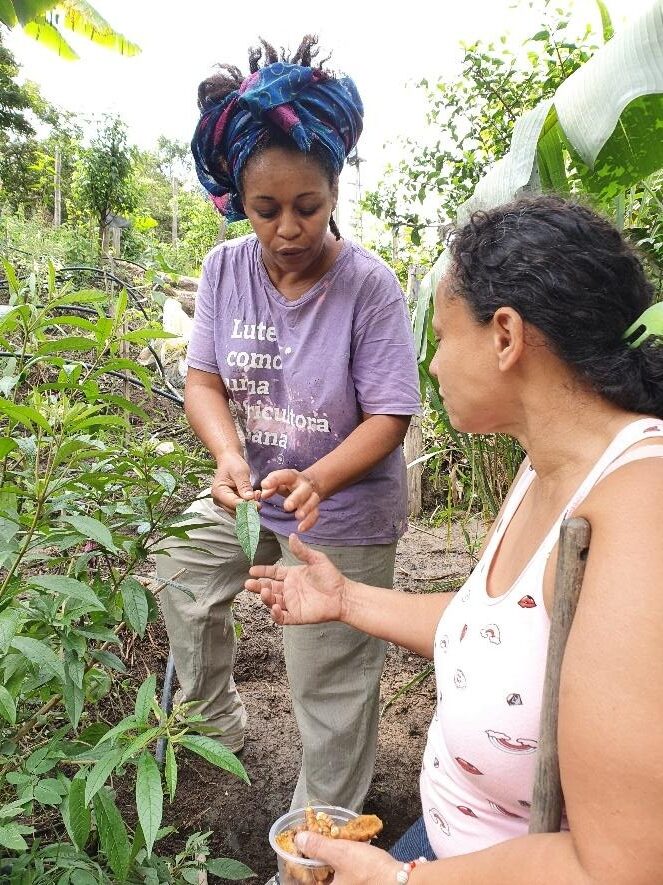
Figure 1: Ana and Marcia planting turmeric roots, author’s photo 2022.
Verónica Jaramillo sees agroecology as the only viable alternative which implies not having to breathe chemicals that could harm her or her children. Her farming practices, such as saving seeds for the next growing season or combining different food plants according to their shade preference, go back to what she learned from her parents. She also connects agroecology to ecofeminism, which for her means sharing her concerns as a women working in the field—for instance related to the psychological stress of looking after her child at the same time—in a larger group of women. Within the territorial context of La Verdecita, her daily activities aim to defend the region’s horticultural belt from real-estate pressures driven by wealthy residents moving to the peri-urban fringe. Selling her freshly harvested products at weekly markets in the city of Santa Fe also allows her to communicate directly with consumers about the values underlying her work.
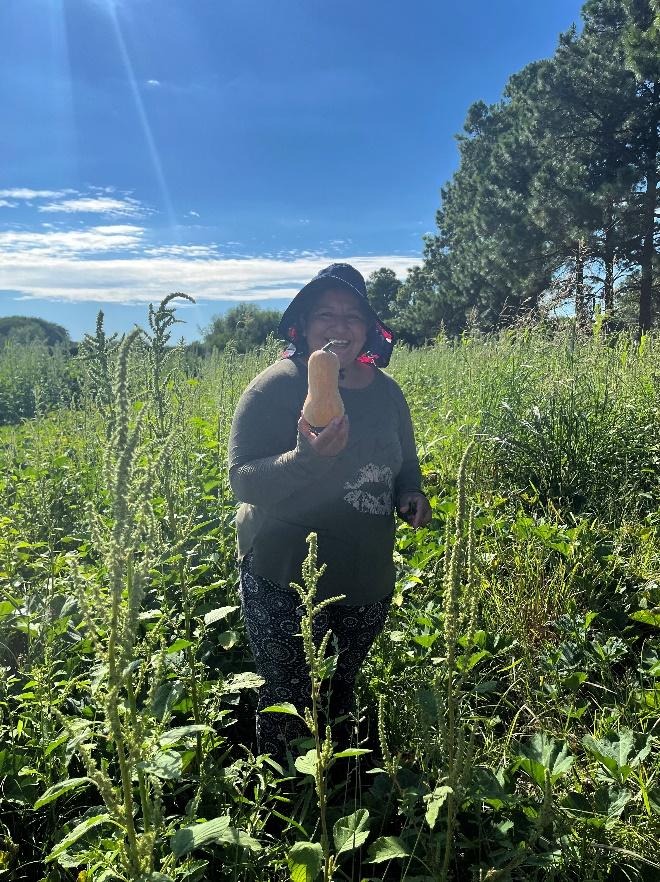
Figure 2: Verónica harvesting squash, author’s photo 2026
Taken together, the experiences of these two women show that environmental racism, machismo, and socio-spatial exclusion intersect and reinforce one another in the everyday lives of residents, shaping both bodies and territories. Ecofeminism and agroecology are integrative political practices that address these overlapping forms of oppression simultaneously. They link food production more closely to communities, revalue care-related activities, and challenge hierarchies of knowledge. According to geographer Yacamán Ochoa, agroecology as a collective political project is crucial for transitioning toward a degrowth word. As a social movement, it constructs a new paradigm of life that questions patriarchal capitalism in politically devalorized territories.
Further readings and resources:
Costa, M. da G. (2023). Meu corpo é meu território: Mulheres em defesa do bem viver na cidade. Ape’Ku Editora.
Food and Agriculture Organization of the United Nations. (2018). La mujer y la seguridad alimentaria. https://www.fao.org/4/x0217s/x0217s03.htm.
Jaramillo, V. (2026, February). Interview with the author. Santa Fe.
Papuccio de Vidal, S. (2020). La experiencia del Colectivo de Mujeres de La Verdecita en Argentina. Revista LEISA de Agroecología, 36(1), 39–40. https://leisa-al.org/web/revista/volumen-36-numero-01/la-experiencia-del-colectivo-de-mujeres-de-la-verdecita-en-argentina/.
Santos, A. (2023, November). Interview with the author. Rio de Janeiro.
Sarlingo, M. (2013). Corporalidad tóxica y sufrimiento ambiental: La experiencia de los habitantes de Colonia Hinojo, República Argentina. Quaderns de l’Institut Català d’Antropologia, 18(2), 156–172.
Yacamán Ochoa, C. (2024, September 5). Reconnecting nature and agriculture: Emancipatory practices in agroecology. Speak4Nature. https://www.speak4nature.eu/2024/09/05/reconnecting-nature-and-agriculture-emancipatory-practices-in-agroecology/.