
Beyond Clean Energy, The Ecological Challenge of Solar Panel Waste
Johan Camilo Navarro Batista, EcoCastulum
2026
The transition toward renewable energy is often presented as a necessary path toward environmental sustainability. However, achieving a truly sustainable transition requires looking beyond clean energy generation and also considering the entire life cycle of the technologies involved. Solar energy, in particular, has become one of the main symbols of the global energy transition, with millions of photovoltaic panels installed worldwide as part of efforts to reduce dependence on fossil fuels, decrease greenhouse gas emissions, and combat climate change. Nevertheless, behind this technological optimism, a question that rarely occupies the center of the discussion is beginning to emerge: what happens when these panels reach the end of their useful life?
This challenge represents an opportunity to rethink sustainability through the principles of circular economy, technological innovation, and eco-design.
Over the last decades, solar photovoltaic energy has experienced rapid growth worldwide. The reduction in production costs, the increase in panel efficiency, and international decarbonization policies have driven an unprecedented expansion of this technology. Global installed photovoltaic capacity reached approximately 400 GW in 2017 and is projected to continue growing to nearly 4500 GW by 2050.
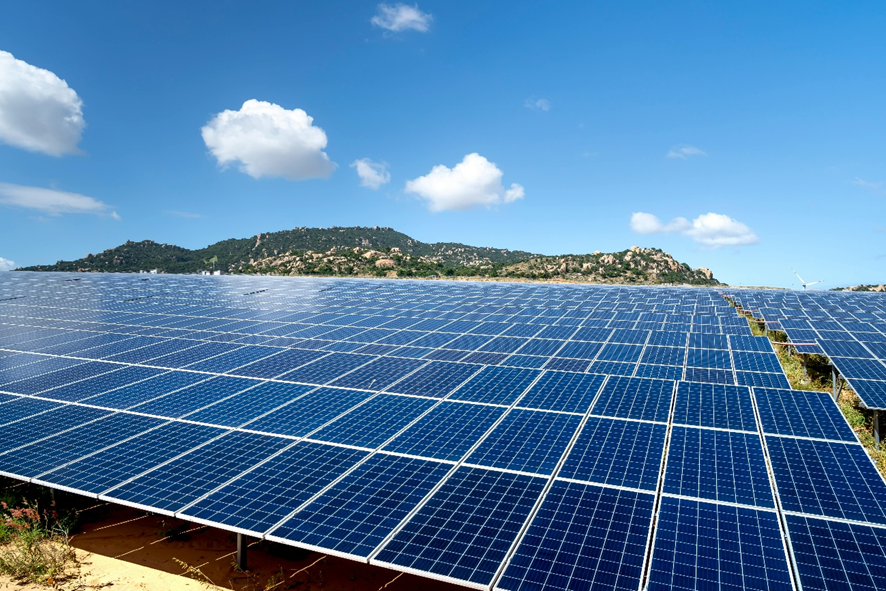
Large-scale photovoltaic installation. Photo by Kindel Media on Pexel
Photovoltaic systems represent a key alternative to fossil fuels due to their low carbon emissions during electricity generation. For this reason, solar energy occupies a central role in global energy transition and climate change mitigation strategies. However, solar panels have a limited lifespan, generally between 25 and 30 years. This means that a large proportion of the systems installed during the first decades of the 21st century will progressively become technological waste, creating new environmental and management challenges.
It is estimated that by 2030 photovoltaic panel waste will reach between 1.7 and 8 million tons, increasing to 78 million tons globally by 2050, of which approximately 15 million tons will come from the European Union alone. This makes photovoltaic waste one of the fastest-growing emerging streams of electronic waste.
At the same time, it is important to consider the components contained in solar panels, which require proper management at the end of their life cycle. These include glass, aluminum, silicon, copper, silver, and polymers, as well as potentially hazardous components such as lead and cadmium present in some photovoltaic technologies. Proper waste management is essential, as a significant portion of these materials ends up in landfills, and inadequate disposal could generate environmental risks related to soil and water contamination.
In this context, the sustainability of the energy transition cannot be limited solely to reducing carbon emissions. It must also incorporate strategies capable of responsibly managing the waste generated by renewable technologies. In this sense, solar panel recycling represents a considerable technical, environmental, and regulatory challenge. Photovoltaic modules are composed of multiple layers of materials strongly bonded together, making their separation and efficient recovery difficult.
Currently, different recycling methods — mechanical, thermal, and chemical — are capable of recovering part of these materials. However, many of these processes still face limitations related to high costs, elevated energy consumption, low recovery rates of high-value materials, and difficulties in industrial scalability.
In addition, end-of-life solar panels are already classified as Waste Electrical and Electronic Equipment (WEEE), requiring differentiated and controlled management. Within the European context, Directive 2012/19/EU establishes the obligation to collect, treat, and recycle this type of waste under the principle of Extended Producer Responsibility, while also promoting material recovery targets and environmental impact reduction.
Likewise, within the European waste classification system, photovoltaic panels may be associated with LER code 16 02 14 or 16 02 13*, depending on the presence of hazardous components. This classification is fundamental for defining appropriate transport, treatment, and recovery conditions within a safe and traceable environmental management framework.
Against this backdrop, the circular economy emerges as a key tool for rethinking how renewable technologies are designed, used, and managed at the end of their life cycle. Beyond reducing waste, this approach seeks to keep materials within the productive cycle for as long as possible, promoting the recovery, reuse, and valorization of strategic resources.
Given that a photovoltaic module consists of approximately 70% glass, 10% adhesive sealant, 10% aluminum, 5% silicon, and 5% other metals, these materials acquire great relevance from both economic and environmental perspectives. Among them, silver represents one of the most economically valuable components and one of the critical raw materials with the highest carbon footprint associated with its extraction and processing. Furthermore, a significant shortage of this resource is expected by 2070.
Similarly, materials such as aluminum and glass, although abundant, require high energy consumption during their primary production processes, resulting in significant associated carbon emissions. For this reason, recovering and reusing these materials through recycling and circular economy strategies not only reduces waste generation but also decreases the extraction of virgin resources and the environmental impact associated with manufacturing new solar panels.
From the perspective of engineering and applied research, one of the main challenges lies in developing more efficient, economically viable, and environmentally sustainable recycling methods.
In this context, eco-design plays a fundamental role. European initiatives such as the RESiLEX project are currently working on the development of solar panels designed to facilitate dismantling, recycling, and material recovery, while incorporating more sustainable components and reducing the use of critical raw materials such as silver and indium. These strategies aim to improve the circularity of photovoltaic systems from the design stage onward, facilitating future valorization and reducing the environmental impact associated with their end of life.
Thinking about the energy transition from a circular perspective implies not only producing clean energy but also ensuring that the technologies enabling it can be safely and efficiently reintegrated into new productive systems. This is where the energy transition represents a historic opportunity to reduce our dependence on fossil fuels and move toward more sustainable development models. However, this transition can hardly be considered truly sustainable if it does not also incorporate responsible strategies for managing the waste and materials associated with renewable technologies.
The case of solar panels demonstrates that sustainability does not depend solely on producing clean energy, but also on how we design, use, and reincorporate these technologies into circular production systems. From engineering, research, and innovation, it is essential to continue developing solutions capable of transforming photovoltaic waste into new resources, thereby promoting a more efficient, circular, and environmentally responsible energy transition.
Further readings and resuources
Ramírez, J., et al. (2025). State of the art of end-of-life silicon-based solar panels recycling with a bibliometric perspective. Cleaner Waste Systems, 11, 100189. https://doi.org/10.1016/j.clwas.2025.100189
Maghraby, Y., et al. (2025). Towards sustainability via recycling solar photovoltaic panels: A review. Sustainable Chemistry and Pharmacy, 45, 101977. https://doi.org/10.1016/j.scp.2025.101977
Ngagoum, Z., et al. (2024). Solar photovoltaic recycling strategies. Sustainable Futures, 8, 100274. https://doi.org/10.1016/j.sftr.2024.100274
Preet, S., et al. (2024). A comprehensive review on the recycling technology of silicon-based photovoltaic solar panels. Results in Engineering, 23, 102670. https://doi.org/10.1016/j.rineng.2024.102670
Wang, J., Feng, Y., & He, Y. (2024). Insights for China from EU management of recycling end-of-life photovoltaic modules. Solar Energy, 273, 112532. https://doi.org/10.1016/j.solener.2024.112532
Bulińska, S., et al. (2025). Sustainable management of photovoltaic waste through recycling and material use in the construction industry. Sustainability, 17(5), 1985. https://doi.org/10.3390/su17051985