Ecological justice through an intersectional lens: Francia Márquez documentary ‘La Igualada’
Pilar Peralta Ardila, LMU
2025
“El territorio es la vida y la vida no se vende, se ama y se defiende” –
[The territory is life and life is not sold, it is loved and defended] –
Colombian social movement motto
The documentary “La Igualada” (2024) by Juan Mejía Botero chronicles Francia Márquez’s trajectory from grassroots environmental activism to Colombia’s vice presidency through a 20-year archival project that began documenting her work in 2001. The film follows an Afro-Colombian activist whose vice-presidential campaign defied the norm by reclaiming the label ‘igualada‘ and inspiring a push for power shift.
This analysis examines how territorial defense articulates with ecological justice through situated epistemologies, based on a documentary screening and panel discussion held at Universidad Nacional del Litoral (Argentina) in November 2024. The collaborative event between Casa de la Cultura Indo-Afro-Americana “Mario-Luis-López,” UNL’s gender studies program, and the Speak4Nature team revealed how Márquez’s case exemplifies intersectional approaches to environmental justice that challenge traditional power structures through life-affirming policies.
Structural Racism and ‘Politics of Death’
Francia Márquez’s political emergence occurred within Colombia’s context of systematic violence against racialized communities. The documentary reveals how her presidential and vice-presidential campaigns unfolded within the framework of structural racism, death threats where activists and social leaders have been assassinated and persecuted.
Some data confirmed this deadly context during the panel discussion. According to González-Perafán, director of INDEPAZ, at least 1,754 social leaders and human rights defenders were murdered between 2016 and November 17, 2024. Of these, 37% of homicides are linked to some type of environmental defense (631). The documentary captures Márquez’s exhaustion with this violence, as she declared: “estamos cansados de la política de muerte” [we are tired of the politics of death] that have historically targeted “territories and those who are part of it, mostly indigenous peoples, black communities, peasants racialized, impoverished”.
From this perspective, the territory has been permanently disputed by economic and political interests. According to Márquez, the territory suffered from “hegemonic development vision that has used armed violence, structural racism, patriarchy and death policies as forms of domination, exclusion, marginalization and dispossession of territorial ethnic rights to favor white supremacy”.
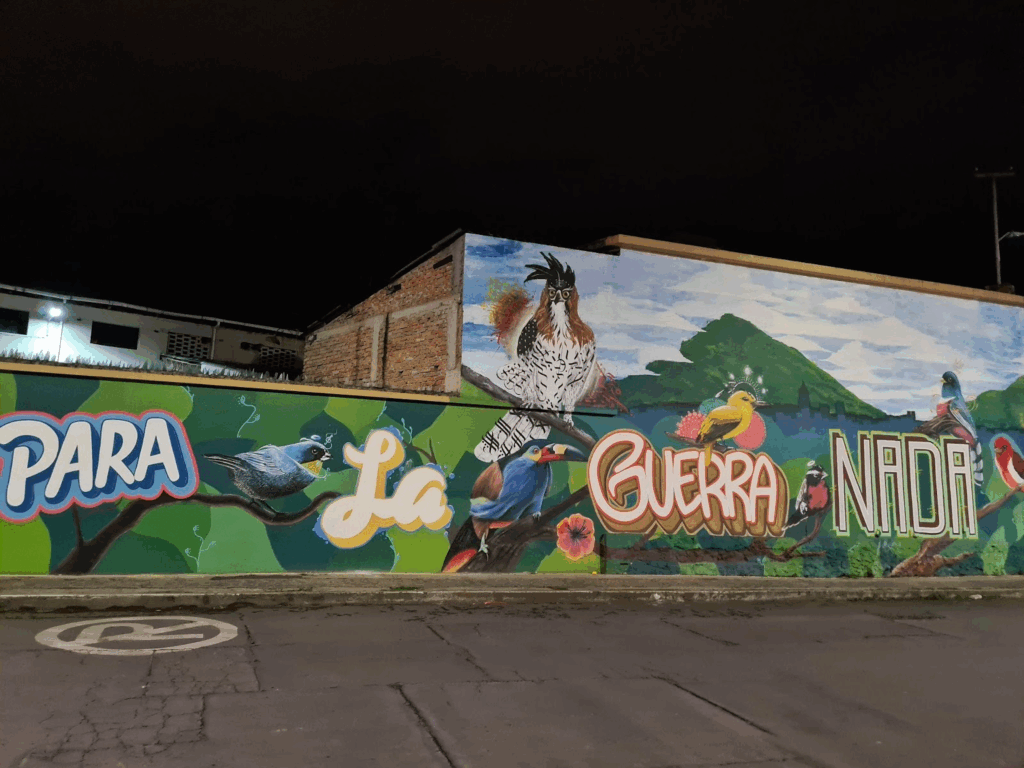
Ph. Pilar Peralta Ardila
Márquez’s campaign represented a fundamental challenge to this paradigm, proposing to “put life at the center” and advocate for an economic system that vindicates life. As discussed in the documentary and panel, this life-centered approach stems from an alternative cosmovision of territory that prioritizes ancestral knowledge systems. These practices include using lunar phases for planting, cultivating diverse crops to nourish the soil, and practicing ancestral mining guided by community principles and values where self-care, conservation, and solidarity prevail.
Decolonial Epistemologies and Community-Based Alternatives
Márquez’s trajectory demonstrates how environmental advocacy can scale from local organizing to institutional transformation while maintaining community-based principles, in which “human relations and relations with the territory are more based on care, on distribution”. Her approach represents another way to give a place to this Afrodescendance, putting it in first place through what participants in the panel described as construction from the community rather than imposed policies. Her proposal for transitioning “from the politics of death toward a politics for life, which must count on social and community participation” illustrates how ecological justice requires fundamental economic transformation centered on care and territorial relationships.
The documentary highlights how Francia’s very name connects to African diasporic territoriality. As discussed in the panel, her “surname Mina is one of the African provenances… people who were trafficked from there to the Americas” and highlights her territorial epistemology.
Francia’s political practice embodies ubuntu philosophy: ‘Soy porque somos’ [‘I am because we are’]. That philosophy not only reminds us of the bond between human beings, but also with nature. This relational ontology became the foundation for her political slogan, which enabled her to travel throughout Colombia through community-based organizing.
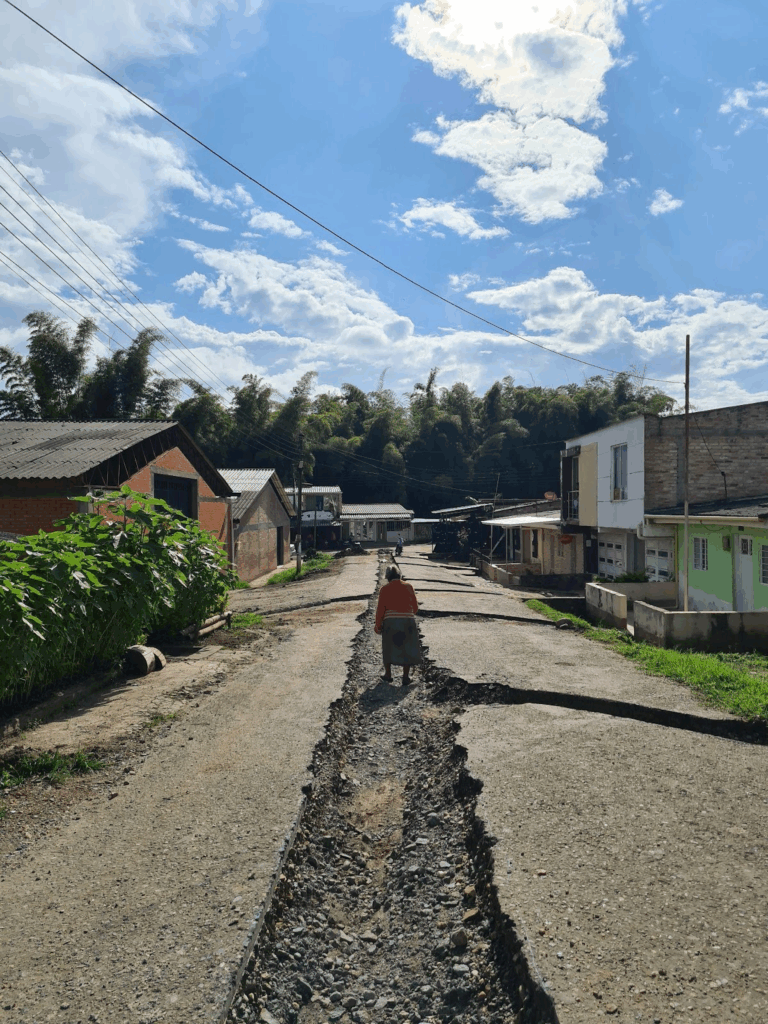
Ph. Pilar Peralta Ardila
Conclusions: Toward Intersectional Ecological Justice
The documented case in “La Igualada” offers crucial insights for ecological justice frameworks across Latin America. According to Yamacán, it highlights the idea of how the stewardship of territory encompasses not only local authorities but civil society. Especially when civil society is not homogenous. As panel participants noted, failing to problematize gender from other inequalities, such as class, race, and place of residence results in empty political spaces.
Francia Márquez’s journey from territorial defense to institutional power demonstrates that effective ecological citizenship must center marginalized communities’ knowledge systems while challenging extractivist models through life-affirming alternatives. As her case illustrates, ecological justice emerges not only from technocratic solutions, but from the situated knowledge and collective organizing of those most affected by environmental violence.
The documentary reveals patterns relevant beyond Colombia, as current model of capitalism, i.e. the extractivist model, represents a territorially shared experience. The construction of exclusionary national imaginaries through mestizaje narratives operates similarly in Argentina and Colombia: In order to decouple them, we must consider them in relation to intersecting inequalities. As Márquez noted the need of “globalizing resistance in favor of life, of caring for the big house, is a responsibility that we cannot avoid”.
Further readings and resources:
El Espectador. (2019, 15 de mayo). Francia Márquez: “estamos cansados de la política de la muerte” | Noticias | El Espectador [Video]. YouTube. https://www.youtube.com/watch?v=VjIJGkYkOQk.
Goldman Environmental Prize. (2018). Francia Márquez: 2018 Goldman Prize Winner. https://www.goldmanprize.org/recipient/francia-marquez/
González Perafán, L. (2024, 22 de octubre). Más allá del asesinato de líderes ambientales en Colombia. INDEPAZ. https://indepaz.org.co/wp-content/uploads/2024/10/Mas-alla-del-Asesinato-de-Lideres-Ambientales.-Leonardo-Gonzalez.-Indepaz-Oct.pdf
Márquez, F. (2020). El territorio es la vida. En F. Márquez, T. Acevedo, & Á. Restrepo, Territorio (pp. 9-20). Rey Naranjo Editores.
Mejía Botero, J. (Director). (2024). La Igualada [Documental; 81 min].
Yacamán, Carolina (s.f.), «Custodia del territorio», Glosario Speak4Nature: Interdisciplinary Approaches on Ecological Justice: https://www.speak4nature.eu/.