Animism
Florencia Tola
Graham Harvey argues that, in anthropology, ‘animism’ has had two predominant conceptualisations: one that draws on Edward B. Tylor’s (1871) contributions on ‘primitive culture’, and the other introduced by Alfred I. Hallowell’s (1960) publication on the ethno-metaphysics of the Ojibwa of Canada.
“Primitive peoples”, Tylor said, impressed by the clarity with which dead or distant people appeared to humans in dreams, maintained that every person possesses a life and a spirit (which enables them to appear to others from a distance). These impressions about life and the ghost would have given rise to religious ideas such as a “doctrine of souls” which, in turn, would have led, at a later stage, to a “doctrine of spirits” that includes a belief in powerful gods and demons of a nature similar to that of souls (1871, p. 436). Thus, Tylor defined “animism” as the primitive religious belief in non-empirical entities (souls and spirits) arising from the ontological similarity between humans and non-humans, due to the extension that the former makes to the latter of their notions of “vitality” and “soul”.
Although these evolutionary-oriented theoretical developments were widely criticised, the term “animism” endured, and almost a century later, it was revived within the framework of what Harvey (2013) calls “new animism”. Hallowell (1960) does not approach the Ojibwa’s ethno-metaphysics as an abstract system but as a way of inhabiting the world. In this metaphysics, personhood is not limited to humans, and ontology is not a primitive belief in spirits, but a coherent way of organising experience in a world where stones, atmospheric phenomena and other beings are also seen as intentional persons. Indeed, from this perspective, animism is not conceived as a religion, nor is it a symbolic projection on the part of humans. As various contemporary authors have pointed out, to regard animist ideas as symbols implies maintaining that they do not account for reality, but only for the way in which certain entities exist in the human mind (Willerslev, 2016).
From the 1990s onwards, the contributions of Philippe Descola have reaffirmed these ideas. In dialogue with the work of Marylin Strathern (1980), Roy Wagner (1981), Bruno Latour (1991) and Eduardo Viveiros de Castro (1986), the French anthropologist embarked, towards the end of the 20th century, on a path of exploration into the possibilities of an anthropology detached from the nature/culture dichotomy. Drawing on his ethnographic work among the Achuar indigenous people of the Ecuadorian Amazon, Descola revisited the classical concept of animism, reinterpreting it to account for alternative ways of conceiving relationships with ‘nature’. Initially, he regarded animism as a means of objectifying the beings of nature, understood as a set of subjects with whom humans establish social relations (Descola, 2014, pp. 198–217). Subsequently, the author reconceptualises the term and defines it as an ontology or a mode of identification between humans and non-humans.
Specifically, a mode of identification would be, for Descola, a general framework acquired during socialisation, through which humans establish differences and similarities between themselves and others based on the axis of physical appearance (‘physicality’) and the axis of internal states (‘interiority’). To identify the objects in their environment, says Descola, humans perceive in them physical and interior qualities that are of the same nature as those with which they experience themselves.
Rather than being taken as ‘the science of being’ in the Greek sense, ontology is, for Descola, ‘the concrete expression of how a particular world is composed, of the kind of equipment of which it is made’ (2014a, p. 437) in terms of the continuities or discontinuities established between humans and non-humans. Defined in this way, ontology allows us to study human diversity at the level where basic inferences are made about what a world contains (the types of beings that exist) and the relationships that are woven between them.
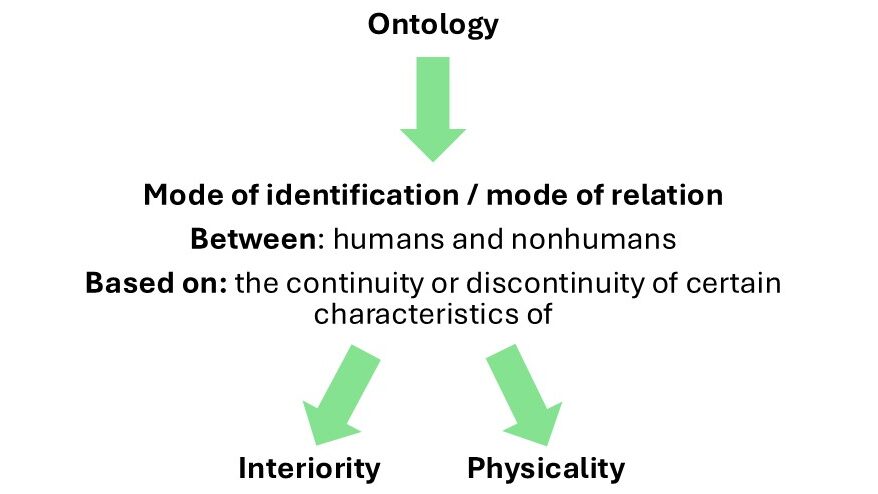
Figure 1. Descola’s ontology (own elaboration).
Since, for Descola, ontologies are the expression of the combination of the elements of physicality and interiority depending on the establishment of continuities or discontinuities between the perceiver and the world, the following possibilities exist:
a. humans and non-humans have the same interiority, but different physicalities (animism),
b. humans and non-humans have the same physicality and differ in terms of interiority (naturalism, Western modernity),
c. the interiority and physicality of humans and non-humans are identical for certain groups of humans and non-humans that differ from other groups constituted on the basis of the same logic (totemism), or
d. the interiority and physicality of humans and non-humans are different and, therefore, each element is a singular entity that establishes an analogy with others (Descola, 2014b).
These four ontologies constitute an effective analytical tool for thinking about, amongst other things, the types of relationships between human groups and what in the West has been termed as ‘nature’.
In the animism of the South American Gran Chaco, for example, animals, plants and places have a spirit-owner who cares for and manages their protected beings. When a Qom hunter wishes to obtain prey, he utters a prayer addressed to the animal’s spirit-owner in the hope that the non-human will grant it to him. This relationship between the hunter and the non-human is based on the recognition, on the part of humans, of the cognitive, emotional and communicative capacities of the animal’s owners.
In the exercise of structural ontology developed by Descola, none of the four possibilities has greater value than the others. Explicitly, Descola took great care to create a “model of intelligibility for social and cultural facts that should remain as neutral as possible with regard to the assumptions of our own ontology. That is why this ontology, naturalism, is nothing more than one of the four possible variants in the ways of objectifying the world” (ibid., p. 235). And this is where ecology or environmentalism comes in.
Descola’s project demonstrates that there are ontological frameworks (the four mentioned) which “distribute what exists and conceive of their constitutive relationships in a different way” from that of Euro-Western modernity (Blaser, 2009, p. 886). This recognition suggests that the modern West’s relations with nature is neither universal nor the only way of establishing relationships between humans and non-humans (indeed, on the scale of human history, this type of relationship is nothing more than an exception). The concept of ‘nature’, like other concepts in the social sciences, far from being ‘transhistorical’ (Descola, 2014b, p. 242), is the product of a European history grounded in a particular type of relationality between humans and non-humans. In Western naturalism, as in other ontologies, the actualisation of sensible qualities and the relationships of the perceived does not occur at random, but depends, as we have mentioned, on acquired schemata. These “ontological filters” (Descola 2010) influence the kind of world that all human groups actualise, resulting not in a plurality of visions of a single world, but in a multiplicity of worlds in themselves.
Unlike animism, Western modernity maintains a one-way relationship of exploitation with the diversity of non-humans (plants, animals and places of life), a relationship not characterised by logics of care, reciprocity or interdependence. The global ecological crisis is underpinned by a type of relationality between humans and non-humans that tends towards ‘objectification’. That is to say, these are relationships in which animals, plants and places of life are not imbued with any form of interiority that would allow for the establishment of ‘subjectivising’ relationships with them; from subject to subject (see Pignocchi, 2025). Certain ecological proposals, rooted in “terrestrial perspectives” (Pignocchi, 2025) that draw on ecofeminisms, no longer aspire to a better use of ‘resources’ but to overcoming this objectifying, one-way relationship, in order to establish interspecies subjectivising relationships. This new relationality is founded on the visualisation of the non-human as partners in sociability, in the style of the spirit-guardians of plants, animals and places in the animist universe.
In this sense, the concepts of contemporary anthropology centred on ontologies can serve ecological perspectives that aim to foster the existence of a new world in which different kinds of relations are realised. Just as for the indigenous peoples of the animist archipelago (Descola, 2004), non-humans are social companions who, alongside humans, make up the world, history and life in common. In the new world upon which contemporary anthropological perspectives and subjectivising environmentalism reflect, the challenge is how to achieve the repatriation of all those beings that Western modernity has relegated to the status of objects to be exploited, studied or contemplated. As long as they remain in the shadows, hierarchical differences between ontologies will beare perpetuated or, in the words of Bruno Latour, “the imperialist universalism of naturalists” (2011, p. 175) or the “ontological monarchy in which the referential unity of nature is imposed” (Viveiros de Castro, 2003, p. 18).
Bibliography:
Blaser, M. (2009). Political Ontology. Cultural studies without ‘cultures’? Cultural Studies, 23 (5-6), 873-896.
Descola, P. (1986). La nature domestique. Symbolisme et praxis dans l’écologie des Achuar. Maison des Sciences de l’Homme.
Descola, P. (2005). Beyond Nature and Culture. Gallimard.
Descola, P. (2010). Cognition, Perception and Worlding. Interdisciplinary Science Reviews, 35 (3-4), 334-340.
Descola, P. (2014a). The difficult art of composing worlds (and of replying to objections). Hau: Journal of Ethnographic Theory, 4(3), 431–443.
Descola, P. (2014b). The Composition of Worlds. Interviews with Pierre Charbonnier. Flammarion.
Descola, P. & Pignocchi, A. (2022). Ethnographies of Worlds to Come. Seuil.
Hallowell, I. (1960). Ojibwa Ontology, Behaviour, and Worldviews. In S. Diamond (Ed.) Culture in History: Essays in Honour of Paul Radin. Columbia University Press.
Harvey, G. (2017). Animism: Respecting the Living World. Hurst & Company.
Pignocchi, A. (2025). Earthly Perspectives. Seuil.
Latour, B. (2011). Perspectivism: ‘type’ or ‘bomb’. Primeiros estudos, (1), 173–178.
Tylor, E. B. (1958 [1871]). Primitive Culture: Researches into the Development of Mythology, Philosophy, Religion, Language, Art, and Custom. (vol. 1). John Murray.
Viveiros de Castro, E. (1986). Araweté: the Cannibal Gods. Zahar.
Viveiros de Castro, E. (2003). AND. Manchester Papers in Social Anthropology, 7.
Willerslev, R. (2016). Foreword. The Anthropology of Ontology meets the Writing Culture Debate ― Is Reconciliation Possible? Social Analysis, 60(1), V-X.