Ecological Justice

Ecological-justice

Currents debates around the decommodification of nature

Dabel Leandro Franco, UNL

2024

Bolivian legislation stands out for incorporating the principle of nature’s decommodification within the legal framework of Buen Vivir (Good Living) and the recognition of nature’s rights. This principle is enshrined in Law 71 on Rights of Mother Earth of 2010 and Law 300 Framework Law on Mother Earth and Integral Development for Living Well of 2012.

The first regulation recognizes “Mother Earth” as a subject of rights and establishes a series of principles of mandatory achievement. Among them, the principle of non-commodification states that “life systems, and the processes that sustain them, cannot be commodified, nor become part of anyone’s private patrimony” (art. 2, clause 5). On the other hand, Law 300 reinforces this principle by stating that the “environmental functions and natural processes of the components and life systems of Mother Earth are not considered as commodities but as gifts from the sacred Mother Earth” (art. 4, clause 2).

The decommodification of nature in Bolivian legislation is based on the consideration of nature as a subject of rights and seeks to promote a harmonious relationship between humanity and nature by countering the process of commodification. In this sense, in a speech delivered in Rio de Janeiro on June 21, 2012, Evo Morales, President of Bolivia, denounced the commodification of nature as a form of environmental colonialism: “The environmentalism of the green economy is a new colonialism of double game, on the one hand it is a nature’s colonialism, by commodifying the natural sources of life and on the other hand it is a colonialism to the countries of the South that charge with the responsibility to protect the environment destroyed by the industrial capitalist economy of the North. This environmentalism commodifies nature, turning every tree, every plant, every drop of water, and every being of nature into a commodity subjected to the dictatorship of the market that privatizes wealth and socializes poverty”.

The process of commodification of nature dates back to the beginning of modern capitalism but has gained impulse in recent decades, especially with the consecration of the “green economy” at the United Nations Conference on Sustainable Development in 2012, known as “Rio+20”. This approach is part of a neoliberal globalization project that considers nature’s components as commodities with an assigned monetary value, promoting environmental management mechanisms based on property rights and the opening of new markets for environmental protection.

The process of commodification of nature manifests in three key legal aspects: status, valuation, and disposition of nature and its components. Legal status is the situation in which an entity finds itself in relation to the law. Legal valuation is the relevance that the law gives to an entity. Finally, legal disposition is the power to dispose of a thing, for example to engage in commercial transactions. Regarding the first, nature is considered as a “thing” or an “object” susceptible to appropriation or protection by humans, who are recognized, individually or collectively, as the sole holders of rights, that is, as “subjects of rights”. Regarding the second, nature is valued from a non-utilitarian, anthropocentric, or instrumental approach, which only recognizes human interests as valid, assigning a monetary value to its components and functions. Finally, the appropriation, use, circulation, and protection of nature and its components are generally governed by private law and the principle of autonomy of contractual will, implying that nature’s components can be objects of commercial transactions.

The decommodification of nature implies a series of transformations in the relationship between society and the natural world, promoting alternative ways of interaction that depart from market logic. Instead of considering nature as a mere exploitable resource, this approach searches for encouraging more harmonious relations between the human and non-human, as well as alternative methods to meet needs that surpass the view of nature as a mere commodity. This transformation affects the three mentioned aspects which intertwine legal discourses with the slogans of socio-environmental movements.

Firstly, restrictions are placed on the disposition of certain natural goods, classifying them as unable for disposition or applying limitations to the exercise of property rights. This idea that a certain natural good “is not available” appears, for example, in the slogan El Famatina no se toca (Don’t Touch Famatina), under which the inhabitants of the Argentine town of Famatina managed to stop different mining projects on the homonymous hill over time.
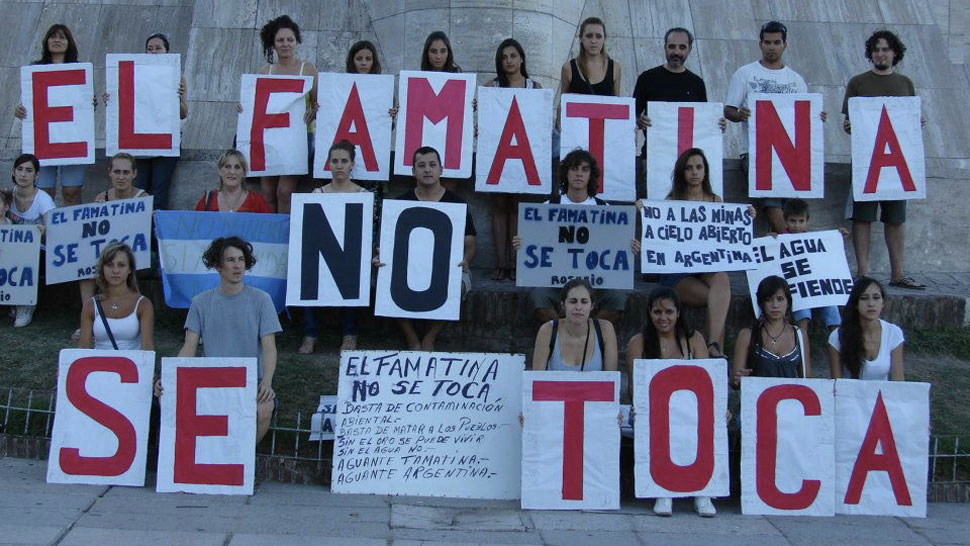
Source: La Gaceta, 2012

Source: La Gaceta (2012)

Secondly, from a non-utilitarian perspective, non-monetary values or interests in nature are recognized, or an attempt is made to overcome anthropocentrism by acknowledging intrinsic value or interests in certain natural entities, i.e., independent of the utility they represent for humans. El agua vale más que el oro (Water Is Worth More Than Gold) is a slogan that has accompanied the struggles against mega-mining in Latin America for years, in an attempt to reverse the logic of capitalism’s valorization and highlighting the importance of use value over exchange value.
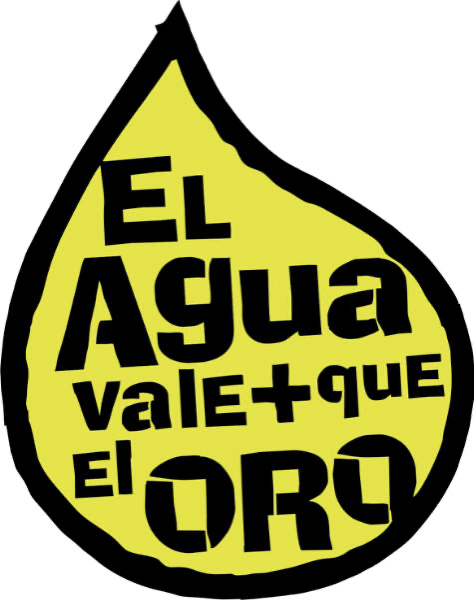
Logo used by several Latin American environmental movements against open pit mega-mining

Logo used by several Latin American environmental movements against open pit mega-mining

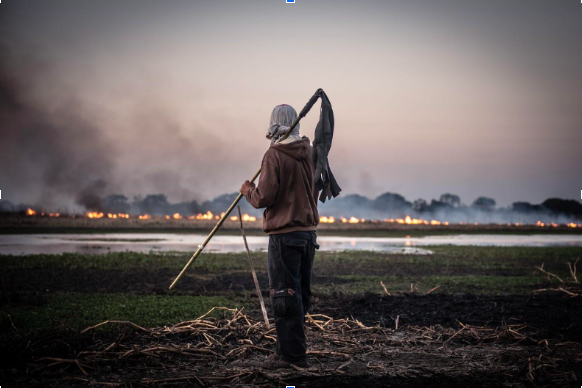
Thirdly, some decommodification proposals involve abandoning the conception of nature as a “thing” or an “object” and considering it as a “subject of rights”. This implies recognizing its own rights that must be respected and protected. An illustrative example of this perspective was evident in the Argentinian city of Rosario, during a demonstration against the fires in the wetlands of Delta of the Paraná River, where a flag displayed the slogan Somos Humedal (We are wetland), dismantling the dichotomies between thing and person, object and subject, nature and society, and incorporating us as part of an ecosystem.
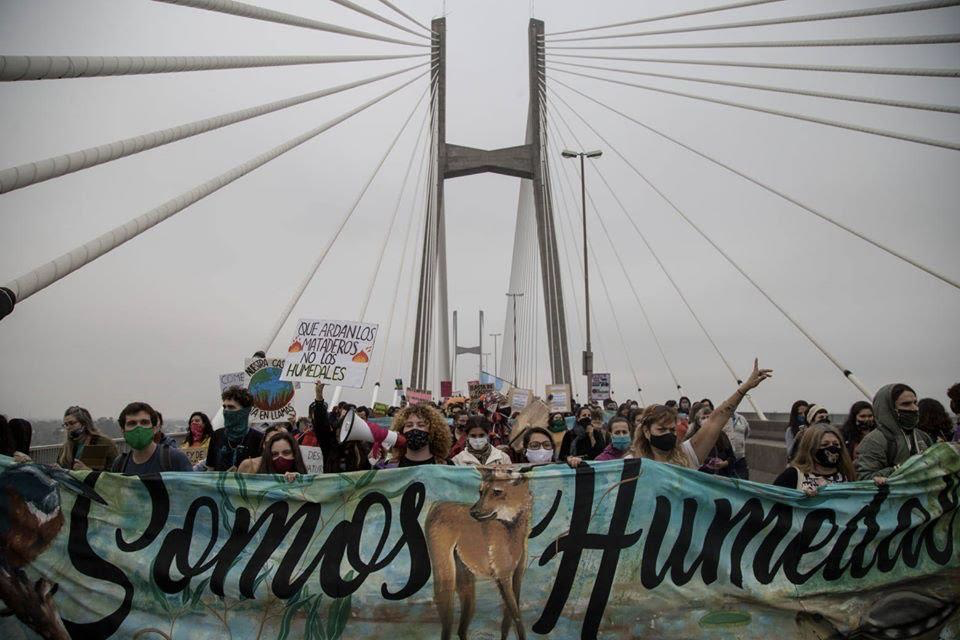
Ph: Guillermo Turin Bootello, 2020

Ph. Guillermo Turin Bootello (2020)

The translations of the content of laws were made by the author of the entry.

Further reading and resources:

Berros, M. V. (2013). El estatuto jurídico de la naturaleza en debate (meulen en el mundo del derecho). Revista de Derecho Ambiental, 36, 133-151.

Franco, D. L., & Balaudo, C. (2019). El potencial desmercantilizador del derecho en las propuestas del Buen Vivir. SaberEs, 11(1), 21-39.

Gudynas, E. (2004). Ecología, economía y ética del desarrollo sostenible. CLAES.

Riechmann, J. (2013). La crítica ecosocialista al capitalismo. Integra Educativa, VI(3), 137-180.

Unceta, K. (2014). Poscrecimiento, desmercantilización y «buen vivir». Nueva Sociedad, 252, 136-152.
Ecological-justice

Rights of Nature: the case of Mar Menor (Spain)

Ramón del Buey Cañas, UAM

2024

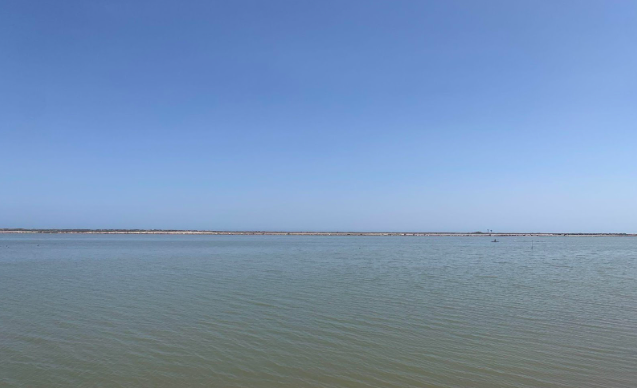
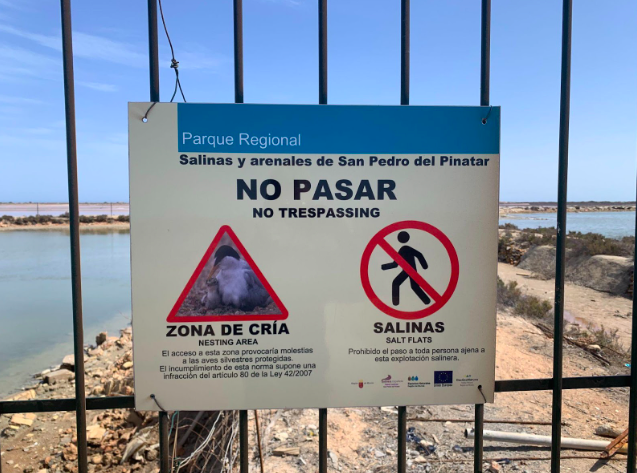
Mar Menor is the largest saline Mediterranean lagoon in Europe, with a surface area of 135 square kilometers and a maximum depth of 7 meters. It is located in the region of Murcia (Spain) and has a high ecological importance due to the habitats and species it hosts, some of them in danger of extinction. As a wetland for aquatic birds, it has an environmental value recognized by the different legal protection figures (since 1994, Mar Menor was included in the list of wetlands registered in the Ramsar Convention). However, in recent years Mar Menor has experienced a drastic deterioration, triggering a reaction that constitutes the first case of rights of nature in Europe: Law 19/2022, of September 30, for the recognition of legal personality to Mar Menor (hereinafter, Mar Menor Law).

Mar Menor, España. Ph. Ramón del Buey Cañas

Mar Menor, España. Ph. Ramón del Buey Cañas

The history of this ecosystemic collapse must go back at least to 1979, after the hydraulic project of the Tajo-Segura water transfer, when the waters of the first river reached those of the second. Campo de Cartagena, the enormous hydraulic slope of Mar Menor, began to be irrigated and agricultural uses changed completely: from rainfed agriculture to intensive irrigation, and Campo de Cartagena (previously a semi-desert area) became the “orchard of Europe”. In addition, since the last century Mar Menor has also been experiencing the pressure of metal mining and the impact of urban activity and its tourist infrastructures (housing developments, artificial beaches and marinas). All these factors began to alter the lagoon, but its basic functioning did not change substantially until 2016. From this year onwards, the ecosystem was unable to absorb more nutrients, especially those coming from the brines after the desalination of groundwater (300.000 tons of nitrates stored in the Cuaternario aquifer, under Campo de Cartagena, mainly as a consequence of intensive irrigation, with more than 8.500 hectares that have been recognized as illegal). This surplus of nutrients became available to plankton, and since the warmer than normal winter of 2015, a series of eutrophication processes or massive explosions of phytoplankton have been occurring. The water became turbid and light stopped reaching the bottom of the lagoon. This turbidity lasted for months, the communities of photosynthetic organisms at the bottom of the lagoon were unable to survive without light and died. The affected waters began to experience strong changes in oxygen levels. On October 12, 2019, after an episode of torrential rains, tons of fish and crustaceans appeared dead due to anoxia (lack of oxygen). On August 23, 2021 a new anoxia caused 4.5 tons of dead fish.

The legislation prior to the Mar Menor Law has been ineffective. One of the keys to this failure is that the different applicable legal regimes generated concurrent competences of the various Administrations (state, autonomous and local) that posed a challenge of coordination against which the different governing organs have not been up to the task. Secondly, certain conducts of the public authorities and competent Administrations have contributed to impede or deactivate the legal protection of Mar Menor: repeal of previous regulations and even rejection of protection plan concessions financed by the European Union. Thirdly, political corruption: there has been a lack of a system of inspection and surveillance of illegal agriculture and livestock activities in Mar Menor. This ineffectiveness of preventive action is evident in the intervention of the courts and tribunals, the most relevant example of which is the criminal prosecution of certain crimes of pollution and environmental prevarication (the so-called Topillo Case, initiated in 2017).

Mar Menor, España. Ph. Ramón del Buey Cañas

Mar Menor, España. Ph. Ramón del Buey Cañas

All of the above constitutes the context from which the Mar Menor Law arises, the result of a Popular Legislative Initiative (PLI): a citizen mobilization of 700,000 people that fed back into a study on the possibility of endowing Mar Menor with legal personality and its own rights. This study was coordinated by Professor Teresa Vicente, began in the 2019/2020 academic year at the Legal Clinic of the Faculty of Law of the University of Murcia and concluded in May 2020 with a publication in the press. The very broad citizen mobilization made it possible for the theoretical proposal of this legal study to be considered by the legislative organs. After passing the corresponding formalities, on April 5 2022 took place in the Plenary of the Congress of Deputies the taking into consideration of the PLI, being approved. From there it passed to the Senate, where the amendments were discussed, and from there it was voted again and approved as Law 2022/19 of September 30, being published in the Official Gazette of the State on October 3, 2022.

Article 1 of the Mar Menor Law grants legal personality to Mar Menor. Article 2 recognizes its right to: (i) exist and evolve by a natural order or ecological law that makes it possible for it to exist as a lagoon and terrestrial ecosystem; (ii) be protected, limiting, stopping and not authorizing those activities that pose a risk or damage to the ecosystem; iii) be conserved, requiring actions for the preservation of terrestrial and marine species and habitats and the management of associated protected natural areas; iv) be restored, requiring, once damage has occurred, repair actions that reestablish natural dynamics and resilience, as well as the associated ecosystem services. Article 3 specifies the representation and governance of the Mar Menor in three figures: a Committee of Representatives, composed of members of the Public Administrations; a Monitoring Commission; and a Scientific Committee, of which an independent commission of scientists and experts, universities and research centers will form part.

In the face of the contemporary ecosocial crisis, the adoption of an ecocentric perspective by the legal system is a vitally important factor. In this sense, the case of Mar Menor deserves special attention. In addition to extending to Europe the legal revolution initiated in Latin America at the beginning of the 21st century with the recognition of the rights of nature, it is a hopeful example of how citizen mobilization can contribute to this “ecology of law”.

Further readings and resources

Salazar Ortuño, E. & Vicente Giménez, T. «La iniciativa legislativa popular para el reconocimiento de personalidad jurídica y derechos propios al Mar Menor y su cuenca». Revista Catalana de Dret Ambiental, 2022, Vol. 13, Núm. 1, pp. 1-38.

Vicente Giménez, T. Justicia ecológica y derechos de la naturaleza. Valencia, Tirant Humanidades, 2023.

Ley 19/2022, de 30 de septiembre, para el reconocimiento de personalidad jurídica a la laguna del Mar Menor y su cuenca: https://www.boe.es/eli/es/l/2022/09/30/19https://ilpmarmenor.org/

Ecological-justice

Demands for ecological and environmental justice in the conflict of the Paraná Delta

Marianela Laura Galanzino, UNL-CONICET

2024

For some decades now, the perspective of Rights of Nature has been gaining ground in Latin America. While this approach has seen significant development in these territories as well as in other countries of the Global South, it has also had a great impact worldwide. Currently, we can speak of Rights of Nature as a global movement. The recognition of Rights of Nature encompasses a series of discussions regarding granting rights to animals (either individually or by species), to certain ecosystems in particular, to nature in general, or even to newer categories of subjects, such as future generations. In these debates, the Latin American territory has contributed a large number of experiences that have been conducted through different means: jurisprudence, constitutional texts, or national laws. On some occasions, demands for the recognition of rights for non-human entities arise within socio-environmental conflicts.

This is the case of the conflict in the Paraná Delta sparked by a large number of fires in Argentine wetland areas. The demands of the different social actors are directed against an absent government management that led to the large-scale destruction of life in the Paraná Delta, causing immeasurable damage to biodiversity, fundamental rights to life, and the health of those who live there. Wetlands are essential ecosystems for the sustainability of life, as they provide multiple ecosystem services. The Paraná Delta, which covers 22,587 km2 of wetland territory and extends over three Argentine provinces (Buenos Aires, Santa Fe, and Entre Ríos), has been degraded for almost two decades by different exploitation activities (intensive livestock farming, soybean monoculture, river traffic, changes in land use for real estate interests). These territories are of utmost importance for regulating temperatures, river levels, and floods, in addition to their rich biodiversity. In short, wetlands are essential for life due to their role in supplying freshwater and food, fishing or aquaculture, providing supply services such as wood, oil, medicinal plants, and fodder for animals; their role in climate mitigation is key due to their capacity to function as carbon reservoirs, and they also play a fundamental role in climate adaptation and reducing disaster risks by absorbing precipitation and reducing the risks of drought.

Traditionally, wetlands were considered wastelands or places where diseases proliferate. During the year 2020, wetlands gained great public attention in our country due to degradation processes and numerous wildfires that took place there. These events not only led to the need for a wetlands protection law but also sparked accusations among environmentalists, public authorities, and the agricultural sector regarding who was responsible for the fires.

In the current year, the wetlands law has not been enacted; the original project has undergone several modifications that reduce its commitment, and the outlook is one of significant setbacks in environmental norms, policies, and institutions in general.There is an alarming situation in wetland systems that is part of a larger water crisis. The conflict in the Paraná Delta began to intensify in 2020, with the proliferation of wildfires, and worsened in 2021 with the historic low water levels of the Paraná River. This has triggered a large number of legal actions, some before provincial courts and others before the Supreme Court of Justice of Argentina. Some plaintiffs are suing individuals, while others are suing the state at its different levels. Not all actors have the same claims or perceptions of the conflict.

"Rio de Fuego" Photographic Series by Mauricio Centurion 2020

“Rio de Fuego” Photographic Series by Mauricio Centurion (2020)

One of the lawsuits (since there are six others filed with the Supreme Court with the same purpose) filed by environmental organizations and a group of affected children incorporates innovative arguments in environmental matters. The first is the recovery of arguments inspired by what is known as the Latin American ecocentric turn, which is closely linked to the recognition of the rights of nature. The second is related to the climate issue, which places this case among the first to join this line. The third relates to the participation of children and the importance of the involvement of future generations in decision-making on aspects that may alter or harm their right to a healthy environment, present or future.

The plaintiffs base their request for recognition of the Paraná Delta ecosystem as a subject of rights on its fundamental role in mitigating the consequences of climate change, considering the rights of present and future generations.

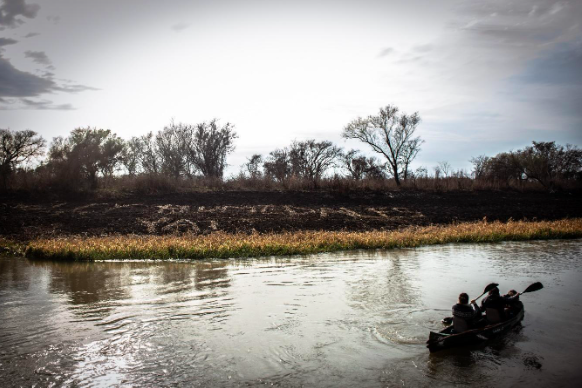
"Rio de Fuego" Photographic Series by Mauricio Centurion 2020

“Rio de Fuego” Photographic Series by Mauricio Centurion (2020)

In this case, the recognition of a particular ecosystem, the Paraná Delta, as a subject of rights is claimed. This action reflects a paradigm shift in the social understanding of the environment or nature, no longer as part of a landscape or natural resource, but rather permeating other conceptions that understand nature as a life system deserving of protection.

Furthermore, the plaintiffs aim to place the conflict in the Paraná Delta within the realm of climate litigation. Thus, the climate isue appears linked to non-anthropocentric perspectives.

A group of fishing families affected by the fires, mainly during the pandemic, formed a cooperative of artisanal fishermen in El Saladillo, Rosario. Their claims during 2020 against the municipal, provincial, and national governments were aimed at addressing the exploitation implied by their work, as well as the informality and complete deregulation of it, since artisanal fishing is not considered a job by our legislation. The consequences of a total absence of the state in this regard translate into frequent accidents due to the lack of proper equipment for the activity, and in some cases, the death of fishermen has occurred for this reason. In addition, they face the impossibility of paying for the fuel for their boats and the deterioration of supplies. This situation worsens during the burning seasons because the amount of fish available decreases, and the river water is contaminated not only with the fuel from the fishing vessels of the refrigerators but also with the putrefaction of dead and incinerated animals.

The conflict in the Paraná Delta incorporates demands for environmental justice and ecological justice, intertwining struggles for the environment, people, ethical issues of understanding that entail changes in the perception of nature, the defense of ways of life, and the denunciation of multiple social inequalities.

The legal case is still ongoing, with fires in the island territories continuing to occur. The wetlands law has not been enacted, and there is no certainty about its potential treatment in the Congress of the Argentine Nation.

Further readings and resources

Galanzino, M. y Berros, M. V. (2022). Argumentos Innovadores para la tutela del Delta del Paraná, La Ley, Tomo 2022-E, Año LXXXVI, 192

Gonzalez, H. y Elias, G. (2021). Ecocidio y conflictos socio ambientales vinculados a humedales en Argentina: el caso del Delta del Paraná. En Anuario en Relaciones Internacionales 2021 / (Publicación digital) ISSN: 1668-639X

Demanda “Asociación Civil por la Justicia Ambiental y otros c/ Entre Ríos, Provincia de y otros s/ amparo ambiental”, 2021.

Ecological-justice

Workshop on Human Rights and Ecological Justice

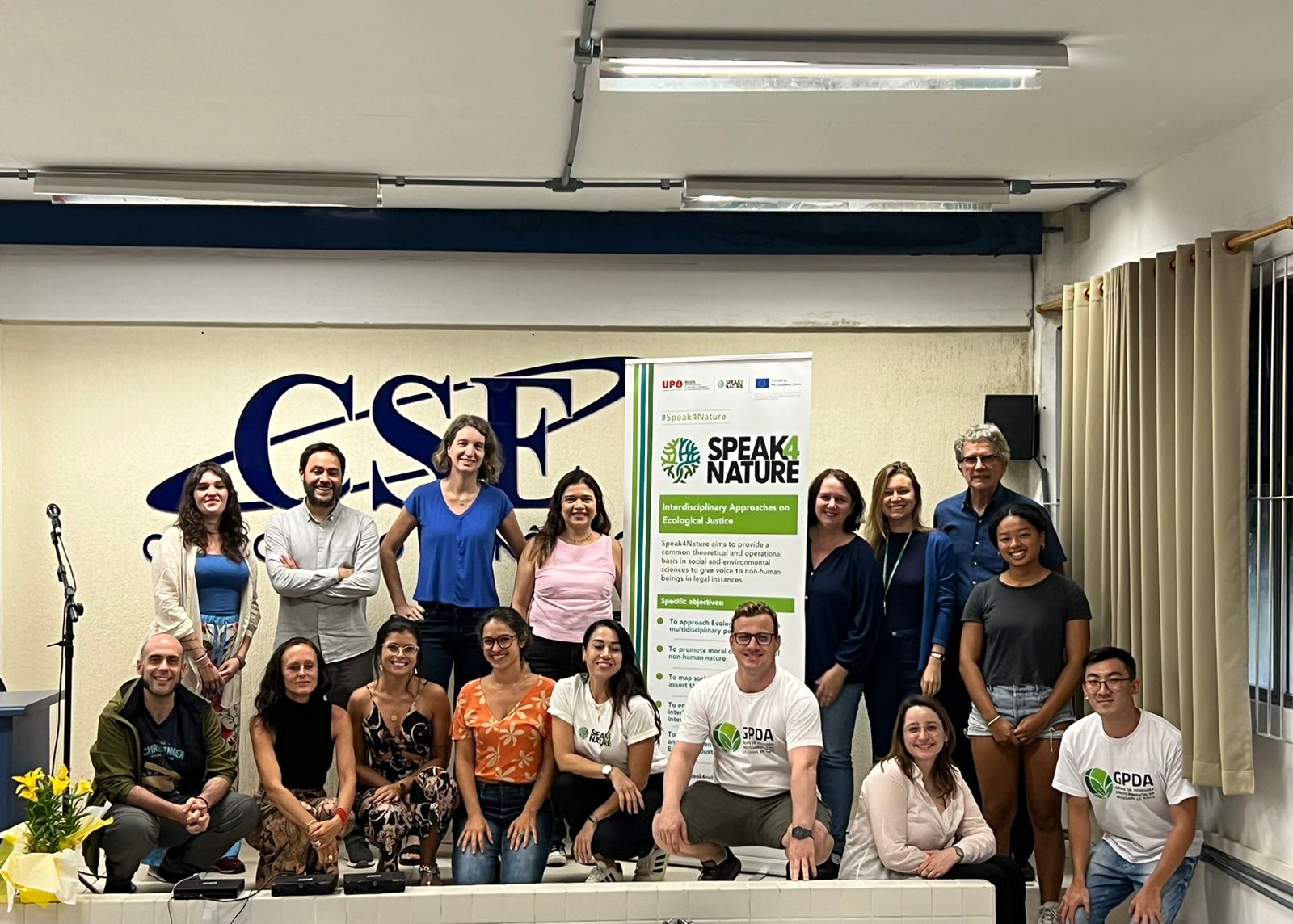
The Workshop “Human Rights and Ecological Justice” that took place in the same week as the “First NetworkSchool: Introduction to Ecological Justice”, in Florianópolis, Brazil.

Workshop on Human Rights and Ecological Justice

The Workshop “Human Rights and Ecological Justice” that took place in the same week as the “First NetworkSchool: Introduction to Ecological Justice”, in Florianópolis.

It was related to the project’s task 2.3, aiming to analyze how human rights theory applies to Ecological Justice, exploring the relationship between human rights and nature.

The activity analyzed how the notion of Ecological Justice concerns environmental human rights. It happened on April 8th, 2024, 2:00 pm (Brasilia time), in the Auditorium of the Center Social Economic (CSE), Federal University of Santa Catarina (UFSC), in Florianópolis, Brazil.

The event was intended for members of partner institutions only.

Ecological-justice

Socioenvironmental Conflicts

Interview for the program El Paraninfo of the UNL public television channel (Litus TV) in which three members of Speak4Nature participated

Interview for the program El Paraninfo of the UNL public television channel (Litus TV) in which three members of Speak4Nature participated: Valeria Berros (UNL), Marianela Galanzino (UNL) and Ramón del Buey Cañas (UAM) talking about socio-environmental conflicts and legal innovations, taking into account cases of Argentina (Delta del Paraná) and Spain (Mar Menor).